


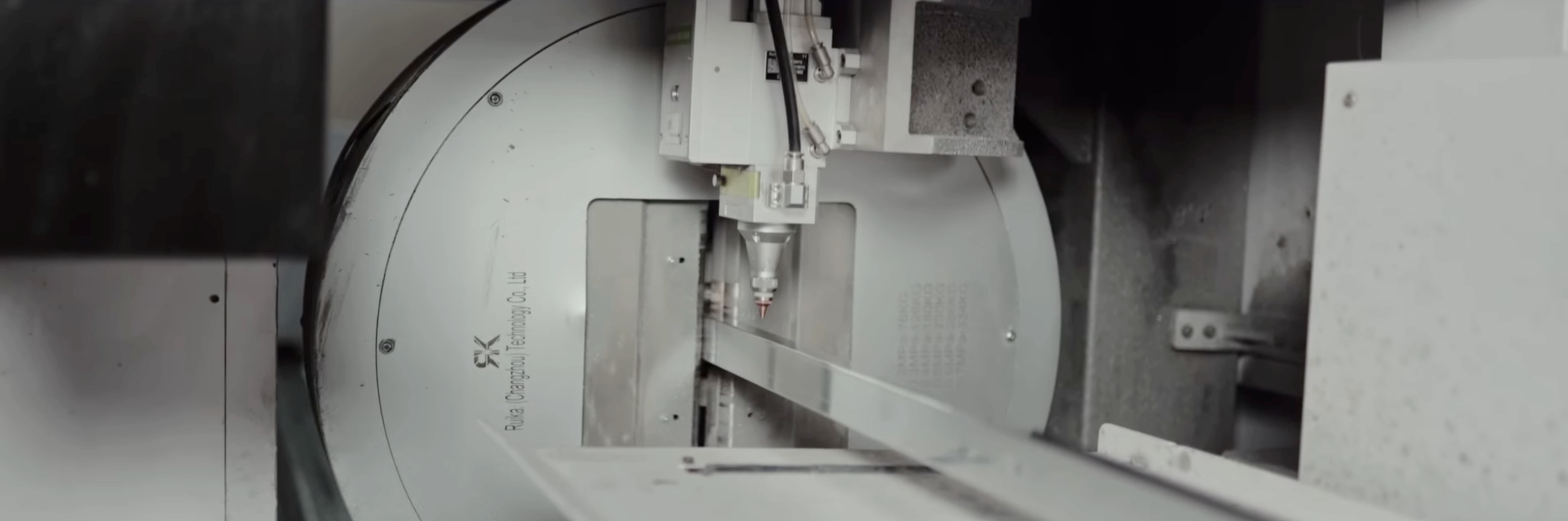
A craft-driven legacy, combined with contemporary production technologies, forms an integrated approach. All processes are structured with durability, continuity, and long-term performance in mind. Each piece is evaluated within the same quality standard—from design through to execution.
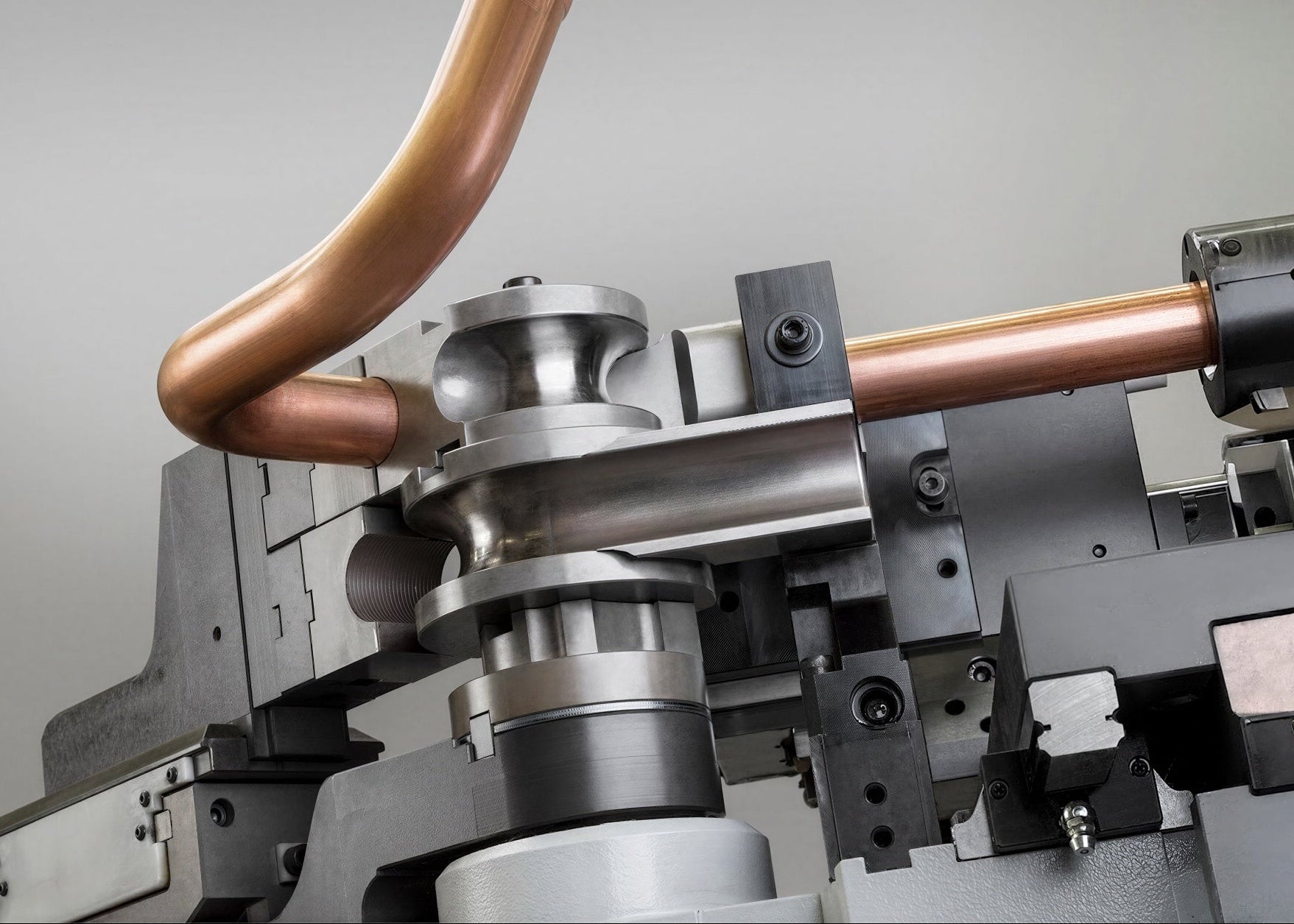
Integrated Manufacturing Infrastructure
An integrated infrastructure enables design decisions to be transferred directly into production. This structure provides flexibility across projects of different scales while ensuring a controllable process and a consistent quality standard throughout.
The manufacturing infrastructure includes:
- CNC laser cutting systems
- Tube laser cutting machines
- CNC tube bending systems
- Robotic and manual laser welding applications
- Fully integrated surface finishing and painting facilities
This infrastructure enables both serial production and project-based applications to be carried out within the same quality standard.
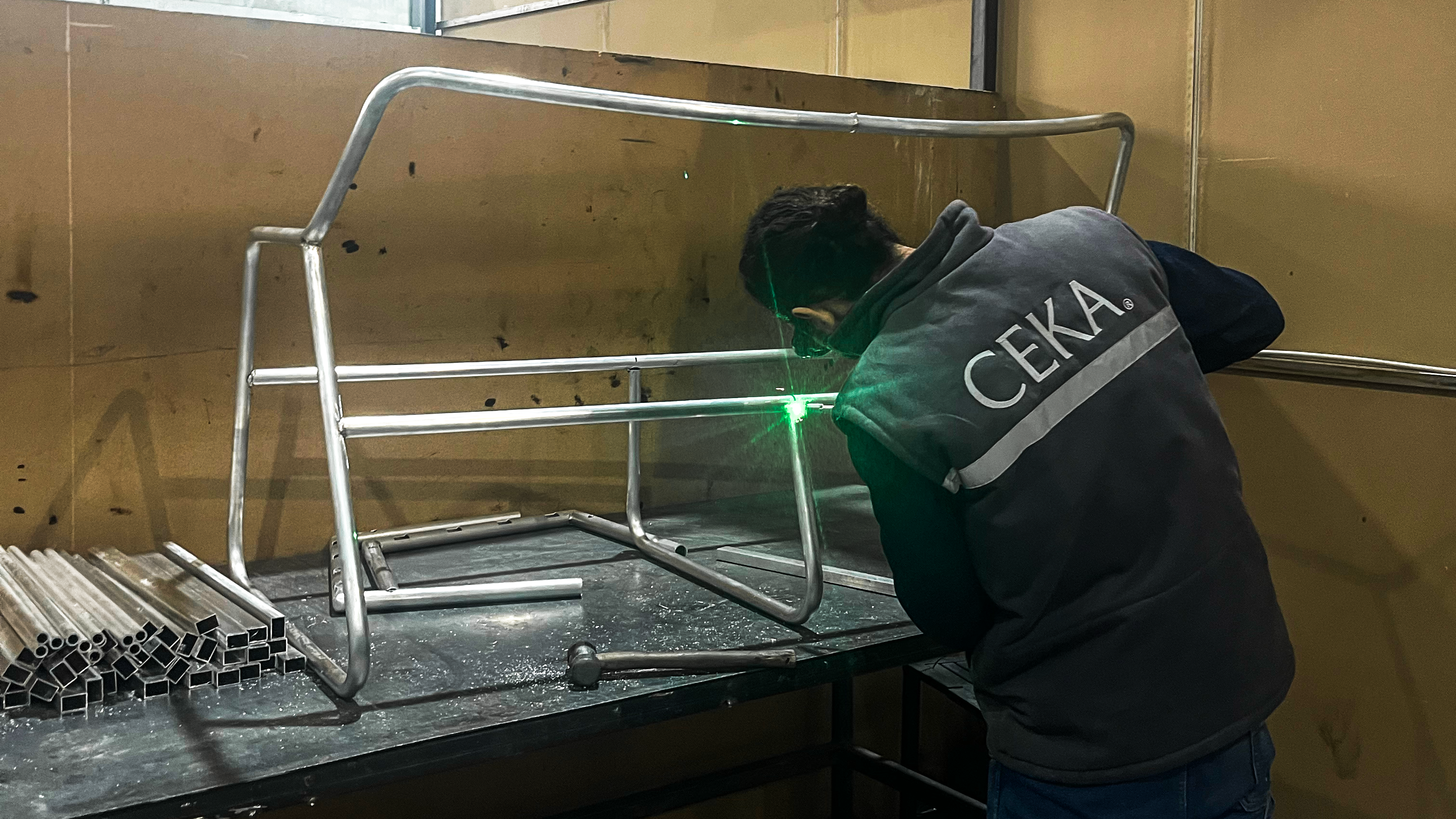
Materials and Finishes Approach
All materials used are selected with outdoor durability and long-term performance in mind. Each material is assessed according to its technical characteristics and integrated into the production process accordingly.
- For all aluminum load-bearing systems, 6063-series thermal aluminum profiles with a 2 mm wall thickness are used.
- Aluminum and metal surfaces are finished with electrostatic powder coating applied after chromate treatment.
- For coating applications, textured finishes suitable for outdoor conditions are preferred.
- For wooden components, first-grade kiln-dried iroko is used as standard, and surfaces are protected with a water-based hybrid oil.
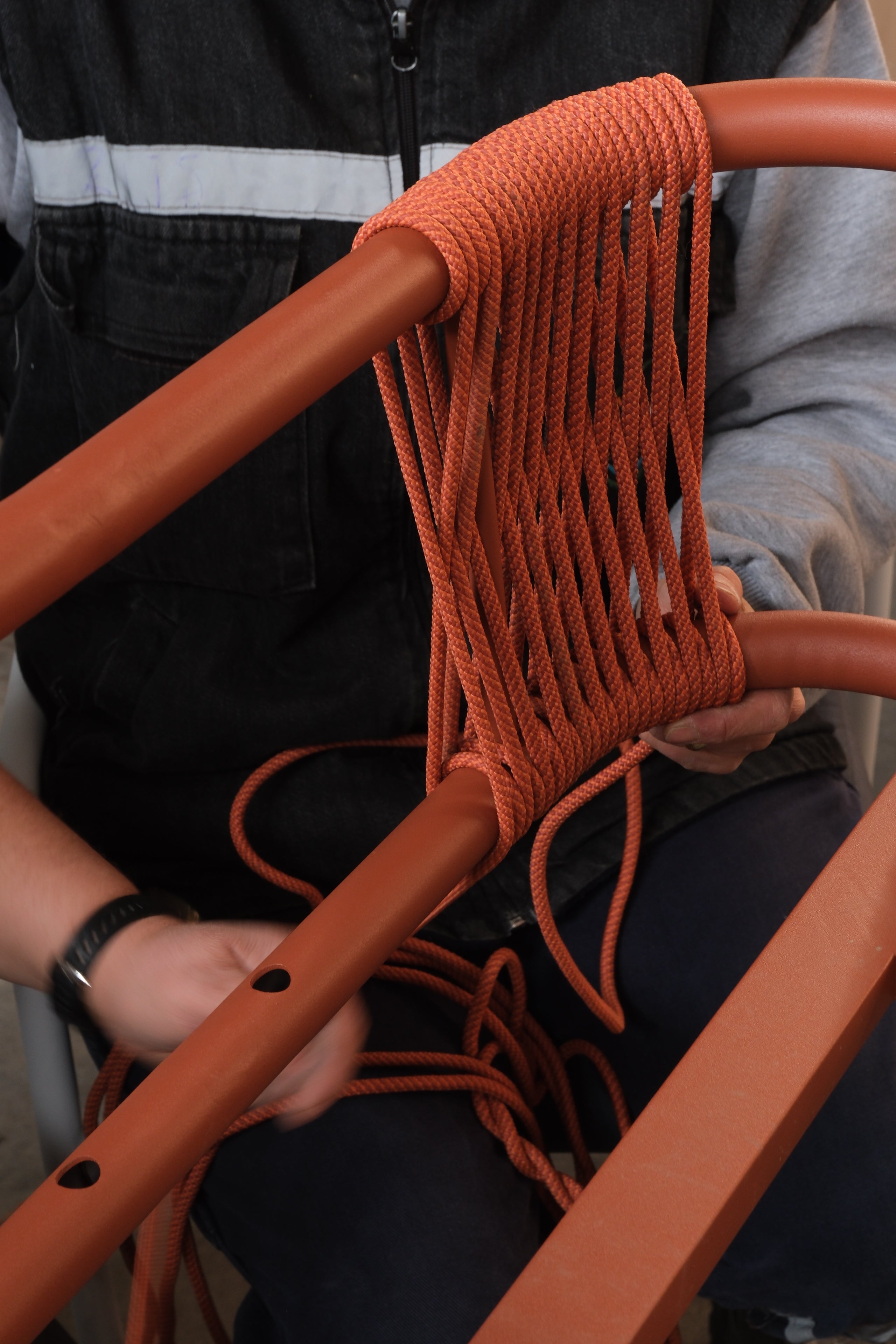
Fabric Upholstery, Cushioning and Knitting Applications
All fabrics and yarns used on seat and back surfaces are made from olefin. This provides UV resistance, color stability, and long-term performance.
- Cushioning and upholstery applications are carried out as an integrated part of the production process.
- Woven surfaces are hand-applied using olefin yarns and integrated into the product with structural balance in mind.
- All components are evaluated as a unified system designed to perform together in both indoor and outdoor environments.
Continuity and Control
Throughout the production process, consistency in measurement, surface finish, colour and material is maintained.
This approach supports form and performance continuity in long-term use.
Each piece is completed with this balance established between design intent, production discipline and user experience.


Each project is approached in line with the space’s needs and conditions of use. Design, production, and material decisions are evaluated together, with long-term performance and spatial continuity in mind.
How does Ceka operate in terms of design and production?
How does Ceka operate in terms of design and production?
Ceka is rooted in a craft-driven production culture and today operates with its own in-house manufacturing infrastructure. Alongside ready-to-ship collections, it develops project-based design and production collaborations, delivering solutions that adapt to different scales, use scenarios, and spatial needs. Its metal production infrastructure—supported by CNC laser cutting, tube laser, and laser welding systems—works in conjunction with fully integrated painting facilities. Fabric cushion production and hand-woven applications made from olefin yarn are considered an integral part of the manufacturing process, and each project is evaluated within a holistic system from design through implementation.
How do project-based collaborations progress?
How do project-based collaborations progress?
Each project is developed by considering the space’s intensity of use, environmental conditions, and programmatic requirements. Design, production, and implementation are evaluated as an integrated whole, and products can be configured specifically for the project.
How do the products adapt to indoor and outdoor use?
How do the products adapt to indoor and outdoor use?
Ceka products are developed to ensure continuity across both indoor and outdoor conditions. Load-bearing systems, surface treatments, and material selections are considered as an integrated system—designed to work together with long-term use, climate resistance, and ease of maintenance in mind.
Which technical infrastructures are used in production?
Which technical infrastructures are used in production?
During production, CNC cutting, tube laser, and CNC tube-bending machines are used. This infrastructure enables dimensional precision, repeatable quality, and flexible, project-based manufacturing.
Which principles guide material selection?
Which principles guide material selection?
Materials are selected based on durability, environmental performance, and long-life criteria. Components such as aluminum structural systems, olefin yarn weaves, and iroko wood are evaluated together to support the product’s service life and the overall spatial experience.